

Many organizations don’t realize how easily inventory numbers drift out of sync. Everything may seem fine at first glance—items are logged, spreadsheets are updated, and teams follow the routines they’ve always used. But as activity increases, even small inconsistencies start to show. A quantity doesn’t match a purchase order. A receiving record is entered later than expected. Two teams are working from different versions of the same file. These problems often begin quietly, yet they grow more noticeable as operations expand.
Why mismatches become a serious issue
Small discrepancies in inventory data can create much larger ripple effects. When teams rely on spreadsheets or tools that were never designed for real-time collaboration, the information becomes fragmented. One department updates their version, another makes changes to a separate copy, and someone else saves an update to a local file that never makes its way back into the shared system. All three sets of numbers may look correct individually—but they no longer represent the whole picture.
Over time, this disconnect affects more than data accuracy. Customer service teams may promise availability that doesn’t exist. Warehouse staff might prepare shipments based on outdated counts. Purchasing might place orders earlier or later than needed because the reports they’re using no longer reflect actual demand. The system shows certainty, but the reality behind it is uncertain.
These inconsistencies also lead to reactive behavior. Teams spend time cross-checking spreadsheets, verifying counts, or sending messages to confirm which version of the information is correct. This slows down the workflow and reduces confidence in the system as a whole.
A realistic scenario
Imagine a warehouse crew starting their day with an inventory report printed the night before. During the evening, several late shipments were received, but those updates won’t appear until someone manually enters them later in the morning. Meanwhile, the sales team reviews the same outdated numbers and believes certain items are still in stock. By the time the receiving updates are entered, orders have already been placed and commitments made based on incomplete data.
Even when everyone is doing their best, the tools themselves introduce delays and uncertainty. The problem isn’t effort—it’s structure.
This is how many inventory issues arise: not from negligence, but from systems that depend on delayed updates, manual reconciliation, and separate data sources that don’t reliably talk to one another.
The value of real-time updates
Accurate inventory reporting relies on more than correct numbers—it depends on timing, structure, and consistency. A system that updates information immediately removes the need to reconcile multiple versions or wait for someone to manually correct values later. This alone can prevent many of the issues that cause downstream confusion.
Real-time updates give teams a shared understanding of what is happening. When an item is received, the count reflects the change right away. When something is allocated to an order, the available quantity adjusts automatically. When returns come in, the system updates without waiting for end-of-day processing.
This clarity helps prevent over-selling, stockouts, and miscommunication. It also strengthens trust—teams rely more confidently on data when they know it reflects current conditions.
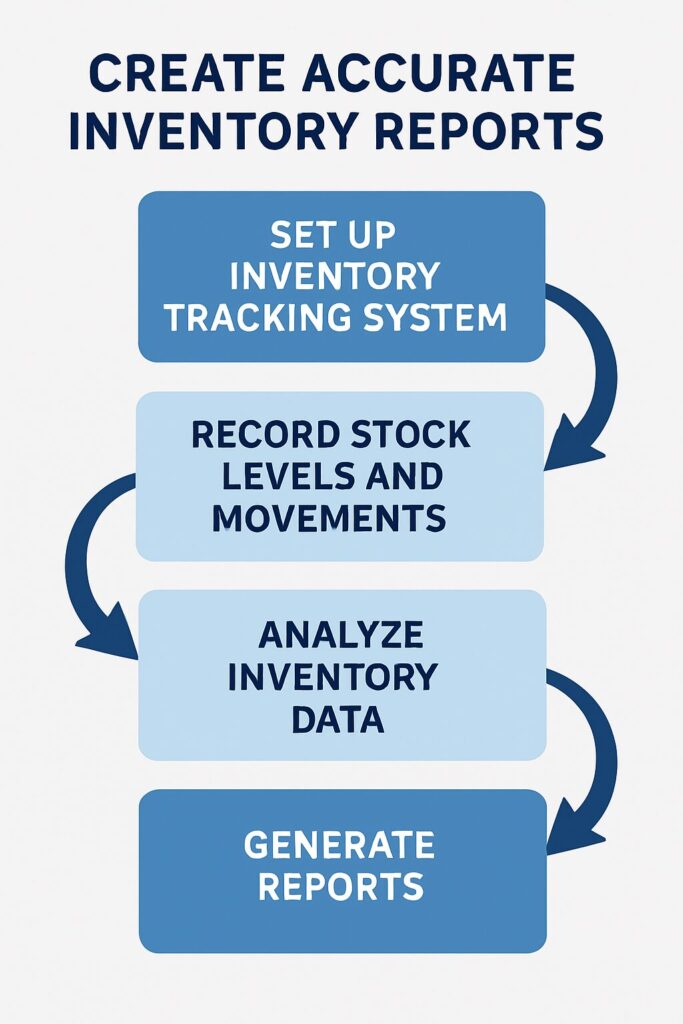
How FileMaker strengthens inventory accuracy
A FileMaker-based inventory system adapts to how your business actually works. It can incorporate your terminology, your categories, your stock movements, and your processes without forcing everything into a generic template. This means serialized inventory, multi-location tracking, assemblies, or condition-based fields can be represented in a way that feels familiar to your team.
Other advantages include:
- Structured entry screens that reduce data-entry mistakes
- Instant updates across departments
- Mobile support for receiving, cycle counts, and inspections
- Validation rules that prevent incomplete or incorrect entries
- Integration with purchasing, sales, or production systems
- A single source of truth for quantities, locations, and statuses
Instead of relying on disconnected spreadsheets or manually updated tools, teams gain a centralized system that maintains consistency automatically.
What improves when inventory reports are accurate
Organizations that move to a real-time, structured system often notice improvements beyond the numbers themselves:
- Fewer discrepancies to reconcile
- Faster order processing
- Clearer visibility for managers and planners
- Reduced duplication of work
- Better forecasting and purchasing decisions
- More reliable customer communication
Accurate reports create confidence. Teams no longer wonder whether they’re working from the latest information, because the system ensures that everyone is.
If inventory uncertainty is costing you time
Portage Bay Solutions can help identify where your inventory process is breaking down and design a FileMaker-based solution that brings consistency, clarity, and real-time accuracy to your workflow. If you’d like to explore what a reliable inventory system could look like for your organization, contact us to schedule a free consultation.