
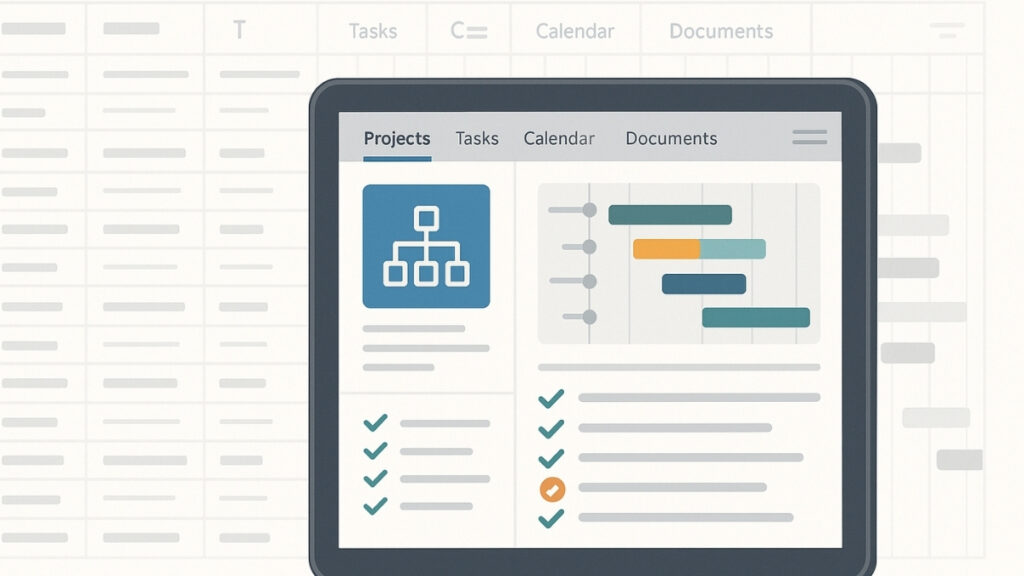
As organizations grow, projects that once seemed manageable begin to involve more people, more steps, and more moving parts. Tasks shift between departments, dependencies stack up, and information scatters across emails, shared drives, and various software tools. Even when everyone is doing their best, the lack of a single, unified system makes it difficult to maintain clarity. A unified project management system solves this by bringing every stage, detail, and handoff together in one place.
Why complexity is hard to manage across multiple tools
Complex projects depend on timing and coordination. When key information lives in different places—one team using spreadsheets, another using cloud documents, another relying on email—it becomes difficult to track progress or anticipate delays. Each system might work well for the group using it, but the bigger picture becomes hard to see.
This fragmentation often causes:
- Uncertainty about which tasks are completed
- Confusion over ownership or next steps
- Duplicate work when updates don’t reach everyone
- Delays caused by scattered communication
- Difficulty identifying bottlenecks early
These issues grow slowly, often going unnoticed until a missed deadline, budget overrun, or customer complaint makes the gaps visible.
A realistic scenario
Consider a project involving installations across several sites. Operations schedules the work, procurement orders materials, field teams complete the tasks, and finance manages billing. Each group uses its own tools: operations keeps scheduling notes in a shared calendar, procurement relies on email and a purchasing spreadsheet, field technicians record updates on paper or text messages, and finance maintains separate billing records.
As the project progresses, no single person has the full picture. Materials may arrive late without operations knowing. Field teams may complete a job without documentation reaching the office. Finance may wait on details that no one realized were missing. By the time leadership reviews the project, the team has spent hours piecing together what actually happened.
The work isn’t failing because anyone is careless—it’s failing because the process lacks a unified structure.
Why a unified system changes everything
When every step of a project lives in one central system, the workflow becomes far more predictable. Tasks, dependencies, documents, and communications are connected, not scattered. Instead of searching for the latest update, anyone involved can view real-time progress. Managers gain the visibility needed to intervene early, while staff have more clarity about what needs to happen next.
A unified system improves:
- Timing: dependencies trigger automatically
- Communication: updates are captured in one place
- Accountability: every step is clearly documented
- Coordination: teams understand how their work fits into the whole
- Accuracy: data is entered once and used everywhere
The process no longer relies on individual memory or personal workarounds. The system guides the workflow.
How FileMaker supports complex project management
A FileMaker-based project management system adapts to your exact workflow. Instead of forcing your process into a standard project template, the system can mirror the specific stages, terminology, and dependencies your team uses.
FileMaker can support:
- Multi-stage project pipelines
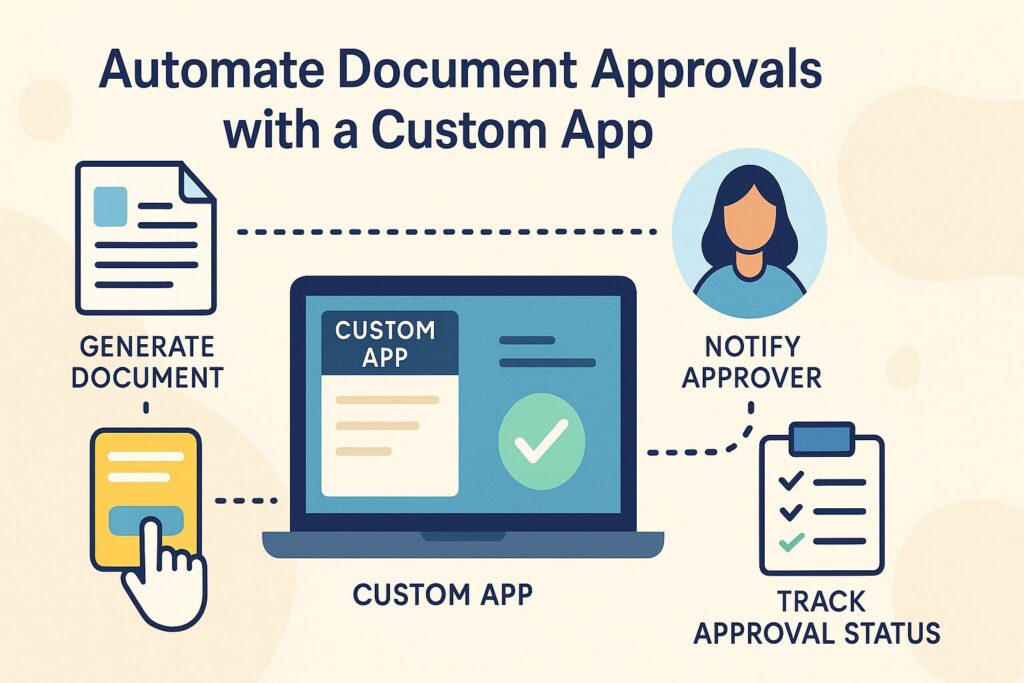
- Task assignments with automatic notifications
- Gantt-style timelines and dependency logic
- Document storage directly on records
- Mobile access for field updates
- Integration with inventory, CRM, or billing
- Custom dashboards for each role
- Change logs and approvals
- Resource scheduling tied to project tasks
Because the system is custom-built, it handles real-world conditions, such as conditional steps, exceptions, and different project paths, without forcing you to compromise on structure.
What improves when everything lives in one system
Teams working with a unified system typically notice immediate benefits:
- Fewer delays caused by missing information
- More transparency between departments
- Reduced duplication of work
- Faster issue resolution
- Easier onboarding for new staff
- More accurate forecasting and reporting
- Stronger coordination between field and office teams
When the system shows everyone the same picture, the project becomes easier to manage from start to finish.
If your projects feel harder to track than they should
Portage Bay Solutions can help you design a FileMaker-based system that brings clarity, structure, and visibility to your project workflows. If you’d like to explore how a unified system can support more predictable outcomes, contact us to schedule a free consultation.