

For years, FileMaker has occupied an interesting place in the software world. Businesses that rely on it often depend on it heavily, while many outside developers might question its use. Mention FileMaker in a room full of traditional full stack developers, and there’s a good chance you’ll get a few eye rolls. The irony is that many of those same developers have never actually worked inside a mature FileMaker system.
So is FileMaker still worth using for business in 2026? The answer is yes – but probably not for the reasons many people think.
The real strength of FileMaker isn’t “low code”
Claris FileMaker is often described as a low-code platform, but that description doesn’t fully capture what makes it valuable.
Its real strength is that the UI, UX, database structure, scripting logic, and deployment environment all exist inside the same application. Developers can literally see what they are building while they are building it. There’s far less compiling, rendering, context switching, and infrastructure overhead compared to many traditional development stacks.
That integration dramatically speeds up development. For businesses, that means operational software can evolve more quickly as needs change. And business needs always change. This flexibility is especially important because the entire purpose of custom software is to solve problems that prebuilt SaaS systems cannot.
If a company’s workflows are generic, there’s usually no reason to build a custom system at all. The businesses that benefit most from FileMaker are the ones whose operational logic doesn’t fit neatly into off-the-shelf software.
Complex business logic is where FileMaker still excels
One of the biggest misconceptions about FileMaker is that it’s just a glorified database or form builder. In reality, many long-running FileMaker systems contain years of deeply customized operational logic that would be extremely expensive to reproduce elsewhere.
For example, we work with businesses whose billing systems go far beyond standard invoice software. Some companies bill based on the individual employee who performed the work. Different employees have different ranks, rates, overtime rules, and per diem structures. A single invoice may combine multiple labor categories and calculation methods into one billing workflow.
Other companies bill by work units rather than time. Different work types may trigger entirely different pricing structures and calculation rules.
These are not situations where a business can simply switch to QuickBooks or a generic SaaS platform and expect the system to function the same way.
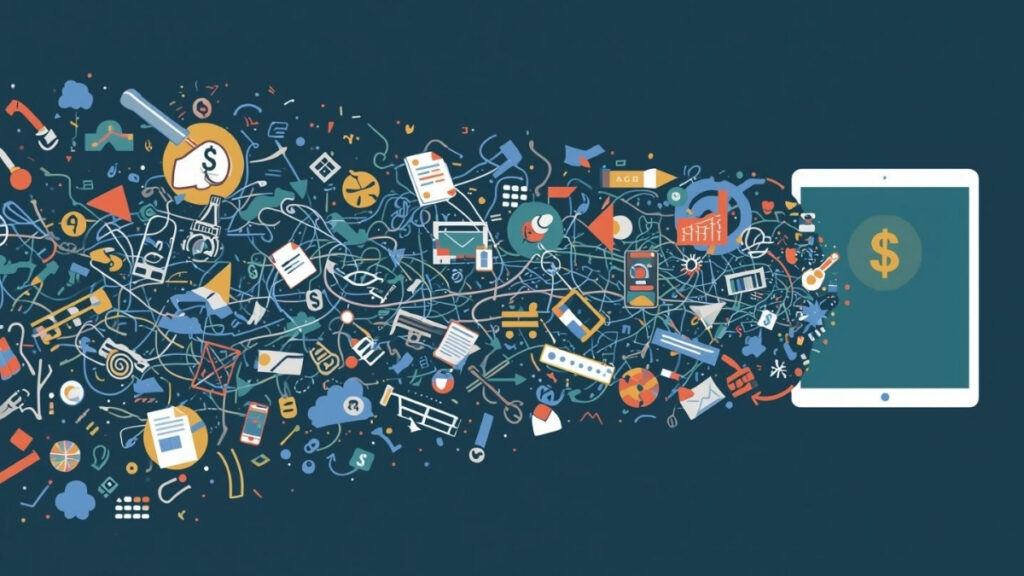
This ability to handle complex logic is where FileMaker continues to shine:
- highly customized operational workflows
- relational business data
- rapidly evolving internal processes
- multi-user administrative systems
- custom interfaces tailored to how employees actually work
In many cases, the software becomes deeply intertwined with the company’s daily operations.
Supporting long-term solutions
Interestingly, many of our clients are not businesses starting from scratch.
More often, companies come to us because:
- their original in-house developer retired or moved on
- the original FileMaker firm disappeared
- the business outgrew what an internal employee could maintain
- someone initially built the system themselves and eventually needed professional help
That alone says something important about the platform.
Many FileMaker systems survive for 10, 15, or even 20 years because they continue evolving alongside the business. That longevity is partly due to Claris maintaining a strong level of backward compatibility between versions. Businesses can continue building on top of existing investments instead of constantly rebuilding from zero every few years.
FileMaker’s long-time presence in the marketplace is a real strength, emphasizing its stability and continuity in a constantly changing technology landscape. While being continually upgraded to take advantage of new capabilities and technologies (Can you say AI?), FileMaker has now been a supported environment for over forty years.
With over 100,000 developers, over one million custom apps built, and forty years of Apple-backed security, it’s built for what’s next.
When FileMaker alone might not be the right choice
This does not mean FileMaker is automatically the best solution for every project. In fact, we increasingly recommend hybrid approaches depending on the business need.
For example, lightweight intake forms or simple data collection workflows may not require a full FileMaker solution at all. If information is simply being gathered and passed elsewhere without extensive processing or relational logic, a web form or SaaS platform may be more appropriate. Likewise, some modern web and mobile experiences can be better suited to specific web technologies.
Dashboarding is one area where native FileMaker has historically been less impressive. JavaScript integrations and Web Viewers can help bridge that gap significantly, but there are situations where a dedicated web application may provide a better experience. In those cases, we often implement web applications alongside FileMaker solutions to provide a smooth public interface which is fed by the underlying FileMaker data.
Very large enterprise environments can also present challenges. In our experience, FileMaker’s sweet spot tends to be small and mid-sized organizations rather than large systems with hundreds and hundreds of concurrent users.
But the biggest mistake businesses make is assuming that replacing a mature FileMaker system with a “modern” stack will automatically improve operations. Sometimes, the opposite happens.
Companies underestimate the years of business logic embedded inside their existing systems. They focus on aesthetics or technology trends without fully understanding the operational complexity underneath. A modernized user interface in FileMaker may be a demonstrably better solution than a full rewrite in another platform.
The citizen developer question
FileMaker has long appealed to citizen developers and technically inclined business users. That accessibility remains one of its biggest strengths. In fact, many businesses initially build systems internally before eventually bringing in professional developers. AI will likely increase what nontraditional developers can accomplish inside platforms like FileMaker over the next several years.
But there is still a major difference between building a small internal tool and managing a mission-critical multi-user operational system, which needs designers who fully understand workflow and logic architecture.
Professional expertise becomes important when businesses start dealing with areas like these, and that need is unlikely to change anytime soon.
- hosting
- licensing
- security
- server customization
- integrations
- performance
- deployment
- multi-user architecture
FileMaker’s weaknesses are limited
FileMaker may not be the perfect solution for all situations, but it has and continues to perform strongly, and is stable and competitive far into the future. Compared to modern Web UI, FileMaker has a few areas best served by utilizing the app’s Webviewer versus FileMaker’s internal layout. This need requires developers to be adept at web technologies such as JavaScript in addition to FileMaker.
For many small and medium-sized firms, these limitations rarely factor into planning. In fact, FileMaker is noticeably better when comparing the hidden costs of complexity in traditional development stacks:
- greater security concerns
- longer deployment cycles
- fragmented infrastructure
- larger development teams
- greater maintenance overhead
- rapidly shifting frameworks and dependencies
Is FileMaker still worth it?
Absolutely! For businesses with a mature FileMaker system, remaining with FileMaker is often the best choice. Replacing those systems generally costs far more than companies initially expect, both financially and operationally.
For new systems, the answer becomes more nuanced. If the business problem involves highly customized workflows, rapidly evolving processes, and operational complexity that doesn’t fit traditional SaaS platforms, FileMaker is an extremely effective solution. In other situations, a custom web application will be the best fit:
- Lightweight public-facing web forms
- Mobile web applications
- Complex, public-facing web applications (registration systems, for example)
We sometimes build these applications on their own, though we often connect them to FileMaker so businesses can continue to rely on their rich and longstanding data history.
Looking ahead
Claris, an Apple company, has a ton of enhancements on the horizon for FileMaker and its platform. What this means is FileMaker will remain stable and relevant, particularly for businesses already invested in the platform. And as AI takes center stage, FileMaker’s strengths, particularly in the area of security, will keep FileMaker a great choice for many custom solutions and for connecting all your dots reliably, flexibly, and with Apple security.
With the Claris advantage, you can:
- Scale at your desired speed
- Build and implement custom solutions
- Rely on Apple security to keep business your business
Portage Bay’s approach
At Portage Bay Solutions, we remain deeply committed to the Claris FileMaker platform. A large portion of our work involves helping businesses maintain, modernize, extend, and stabilize systems that are central to their daily operations. We continue to believe FileMaker is one of the fastest and most effective ways to build and evolve highly customized operational software for many small and mid-sized organizations.
At the same time, we also recognize that technology expectations are changing. Businesses increasingly need systems that connect seamlessly with web services, mobile experiences, APIs, and external platforms. In some situations, a dedicated web application may be the better tool for a specific feature or workflow.
Because of that, our approach is becoming increasingly hybrid and strategic rather than platform-exclusive.
In some cases, that may mean extending an existing FileMaker system with modern web technologies. In others, it may mean developing standalone web-based tools that integrate with operational systems behind the scenes. The goal is not to force every business problem into a single platform, but to choose the right approach for the specific operational need.
What has not changed is our belief that software should adapt to the business – not the other way around.
As AI, automation, and web technologies continue evolving, we expect the line between traditional application development and rapid application platforms to become increasingly blurred. Businesses will likely care less about what platform is underneath and more about keeping their systems stable, maintainable, secure, and capable of evolving.
FileMaker will continue to serve many businesses extremely well, far into the future. For companies with mature systems already in place, thoughtful evolution is often far more valuable than starting over.
Ready to get started?
Do you have an existing FileMaker solution that needs updating, modernizing, or additional features? Are you evaluating whether FileMaker is still the right fit for your business moving forward? Are you interested in a custom web application, which could be stand-alone or FileMaker-integrated?
At Portage Bay Solutions, we help businesses maintain, enhance, and extend FileMaker systems of all sizes- from refining long-standing business habits to integrating modern web tech and third-party services.
Whether you are maintaining an existing system, planning a major upgrade, or exploring new development options, we’d be happy to help you evaluate the best path forward.
Contact us for a free consultation, and take a look at some examples of our work.
This piece represents a collaboration between the human authors and AI technologies, which assisted in both drafting and refinement. The authors maintain full responsibility for the final content.