

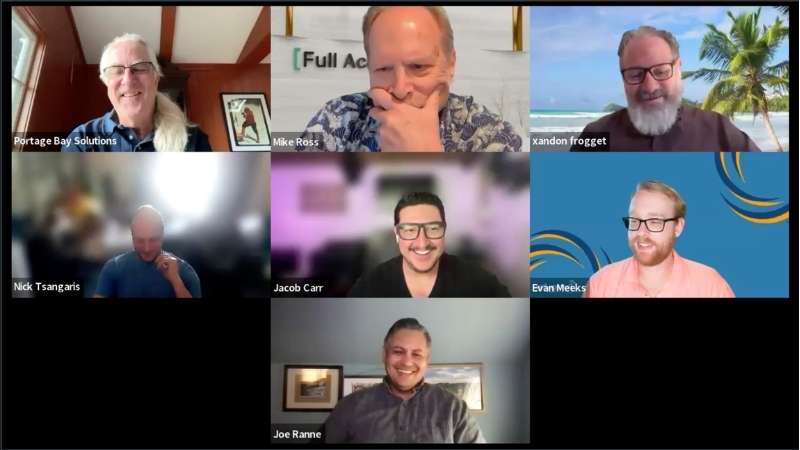
AI has become an ingrained part of many developers’ toolkits. It can write code, explain concepts, troubleshoot problems, generate documentation, and even help architect entire applications. But as powerful as these tools have become, they’re far from perfect. This episode of the FileMaker DevCast covers how knowing the shortcomings of a tool is just as important as knowing its strengths.
AI is overly confident, even when it’s wrong
AI doesn’t always know when it doesn’t know something. Whether it’s Claude, Gemini, or another model, AI is designed to provide answers. Those answers might be incredibly insightful. But they can sometimes be completely fabricated. It can be hard to tell because the wrong answers are delivered with the same gusto and confidence as the right ones.
Our devs share several examples from their recent projects where AI confidently suggested functions, script steps, or syntax that just simply don’t exist. This misleading isn’t intentional. Rather, the AI is doing exactly what it was designed to do – predict the most likely answer based on patterns from its training data. But those patterns aren’t always correct, especially in specialized development environments like FileMaker.
One lesson came up repeatedly throughout the conversation: Trust AI as a collaborator, not as an authority.
Context matters more than you think
As conversations become longer, AI has to juggle more and more information. Eventually, earlier details begin to lose clarity, conversations drift, and responses become less precise. We often call this “context rot.”
Our devs compared it to talking with someone for hours, jumping between multiple unrelated topics, and then expecting them to perfectly remember every detail from the beginning of the conversation. One approach the devs have learned is to keep conversations focused and avoid letting context windows grow too large. Often, starting a fresh conversation produces better results than continuing an old and cluttered one.
AI doesn’t know FileMaker as you do
General-purpose AI models know a little about almost everything, but they don’t automatically understand everything about the deep knowledge of each platform. Here, they would do well to look to the ancients for reminders:
“The learning and knowledge that we have is, at the most, but little compared with that of which we are ignorant.” – Plato
“All I know is that I know nothing.” – Socrates
John’s example in the DevCast involves analyzing FileMaker Server log files. AI repeatedly misinterpreted how the logs recorded long-running operations, leading to incorrect averages and misleading conclusions. John was able to improve his AI workflows by teaching his agents how FileMaker logging actually works.
Domain expertise still matters. AI becomes dramatically more useful when it’s paired with someone who understands the technology well enough to recognize when something isn’t right.
Better workflows beat better prompts
Instead of asking AI one giant question, our devs break down problems into smaller pieces, creating reusable skills, training project-specific agents, and giving AI the context it needs before asking it to solve complex problems. The goal isn’t simply to get an answer, but to create a repeatable process that consistently produces better and better answers.
Great structure, imperfect code
Despite discussing plenty of AI shortcomings, the conversation wasn’t negative. In fact, everyone agreed that there are areas where AI genuinely shines.
While AI-generated FileMaker scripts still require careful review before they can be deployed, they’re often excellent starting points. The models tend to produce logical script structures, thorough comments, thoughtful error handling, and even useful automated tests. AI has been a capable first draft writer and one that can save significant time while still benefiting from human review and refinement.
Original thinking still belongs to humans
As the conversation goes on, the topic shifts from code to creativity. Whether generating UI designs or creating graphics, AI often gravitates toward the average of everything it’s learned. Without strong direction, many outputs begin to look remarkably similar.
The takeaway? If you want something original, human creativity can’t be replaced. AI is incredibly effective at expanding on ideas, accelerating production, and handling repetitive work. But originality, personality, and vision still come from the people using the tools.
The wrap-up
AI is improving at an astonishing pace, and every new model closes some of the gaps discussed in this episode. But today’s best practices remain remarkably consistent:
- Verify AI-generated code before using it
- Keep conversations focused to avoid context drift
- Provide clear, specific context
- Build reusable workflows instead of relying on one-off prompts
- Let AI handle repetitive tasks while developers provide expertise, creativity, and judgment
Despite the hubbub, AI isn’t replacing experienced developers anytime soon. Instead, it’s becoming another tool that works best when paired with curiosity, healthy skepticism, and real-world experience.
Contact us
Have you run into an AI hallucination, a surprisingly brilliant solution, or a workflow that changed how you develop? We’d love to hear your story.
This piece represents a collaboration between the human authors and AI technologies, which assisted in both drafting and refinement. The authors maintain full responsibility for the final content.